Hermes Roadmap (Community): Letting Multiple Sessions Collaborate
Hermes official roadmap part 9: a community proposal to end session silos — shared context and direct messaging between sessions.
Imagine your AI assistants are brilliant but work in soundproof glass booths—they can’t pass notes, can’t see each other’s progress, and every time you need them to collaborate, you have to play messenger.
What This Direction Is: Turning “Lone Workers” Into a Project Team
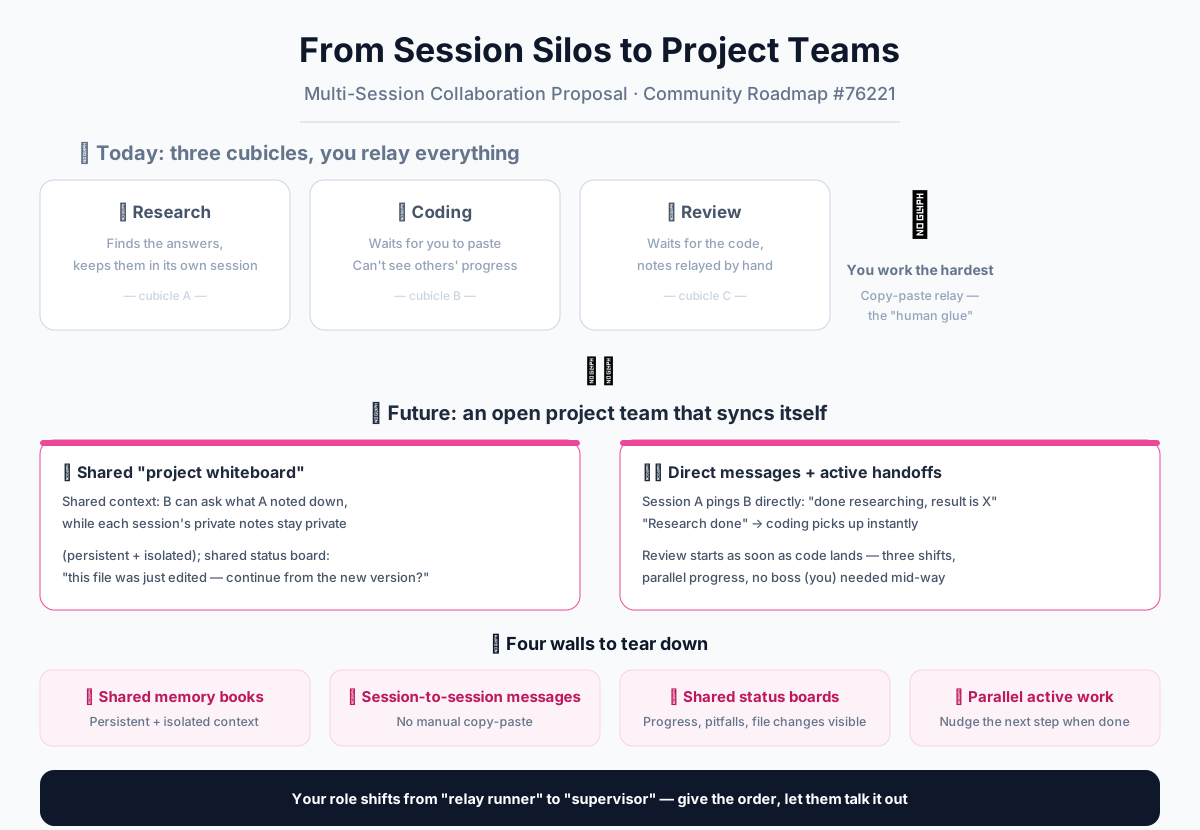
Think of a small company. You started with one employee who did everything. Then you hired two more, but the office rule is: everyone stays in their own cubicle, no talking, no sticky notes, no peeking at each other’s work. As the boss, you run back and forth, copying output from Employee A, pasting it to Employee B, then carrying B’s feedback to C. That’s exactly what managing multiple Hermes sessions feels like today—each session is an “information island,” and you are the exhausted courier.
The community’s proposal is to tear down those cubicle walls and build an open-plan project room. Three sessions could share a “project whiteboard” (shared context), pass each other notes (send messages), see who’s done what (shared status), and even work at the same time while nudging each other (parallel collaboration). This isn’t the boss delegating tasks to employees—it’s the employees holding their own stand-up meetings, syncing progress, and handing code to each other directly.
What the Official Plan Includes: Four Steps to Break the Walls
The roadmap proposes four concrete improvements, each building on the last. Here’s what they mean in plain language, with the acceptance criteria that would prove each one works.
Step One: Give Every Session a “Shared Memory Notebook”
Right now, each session only remembers its own conversation. Switch from session A to session B, and you have to start from scratch. The plan is to give each session a persistent, isolated memory notebook. Persistent means if you close the window and reopen it later, the session still remembers. Isolated means each session has its own notebook—they don’t scribble over each other’s pages.
Acceptance criteria: You tell session A to note something down. Then you switch to session B and ask, “What did A just write down?” B can answer correctly. But if A’s notebook contains a note marked “private to A,” B cannot see it.
Step Two: Let Sessions “Pass Notes” to Each Other
No more manually copying text between chat windows. Session A should be able to send a direct message to session B, like: “I finished my research—conclusion is X. Keep that in mind when you write the code.” This is like internal email between employees—no boss needed for relay.
Acceptance criteria: You tell session A, “Send this conclusion to B.” Then you open B’s conversation, and B shows a message from A, and B can quote it while continuing its work.
Step Three: Share a “Project Status Board”
Every session can see the current task’s progress, what pitfalls were found, and which files were changed. Imagine a team sharing one online document—when anyone updates it, everyone else sees it immediately.
Acceptance criteria: Session A modifies a file. While session B is working, B proactively asks, “That file was just changed—should I continue based on the new version?” instead of blindly using outdated information.
Step Four: Support “Parallel Work and Active Pinging”
This isn’t simple parent-child delegation. Instead, three sessions work on different stages simultaneously. When one finishes a step, it actively notifies the next stage to start. For example, the research session finishes gathering data and calls out, “Data is ready!” The coding session immediately picks it up. The review session sees the code commit and automatically begins reviewing.
Acceptance criteria: You start three sessions at the same time. They arrange their own order, wait for each other, and pass the baton—without you intervening once.
What It Means for Users: From “Messenger” to “Supervisor”
Once this path is complete, your role changes completely. Today, you are the most tired messenger—all information flows through you. Tomorrow, you only need to state the goal clearly, then sit back and watch three sessions hold their own meetings, divide work, and report back. Complex tasks become an assembly line: research, implementation, and review run in parallel, so total time might shrink from “finish one, then the next” to “three shifts working simultaneously.”
Even better, you will never lose context again. Previously, with three sessions open, you’d forget who said what. Now they share memory, and you can see the whole picture from a single overview screen. The community proposal stresses that this isn’t just stacking features—it’s making collaboration proactive. You don’t ask “Are you done yet?”—they tell you when they’re done.
This roadmap item is still in community discussion, but the direction is clear: turn Hermes from “one smart soldier” into “a well-coordinated team.” For everyday users, this means no more being the glue that sticks every step together. You give the order—and let them talk it out among themselves.
📖 Official Docs
This article is based on the official Hermes Agent documentation:GitHub ›/issues/76221