Hermes v2026.4.3 Update: Pluggable Memory, Key Rotation & Stealth Browser
Hermes v2026.4.3 (2026-04-03) update: Hermes Agent v0.7.0 (v2026.4.3)
This release is all about making Hermes more resilient, flexible, and easier to watch over—think of it as giving your AI agent a sturdier toolbox, a backup generator, and a pair of clear glasses.
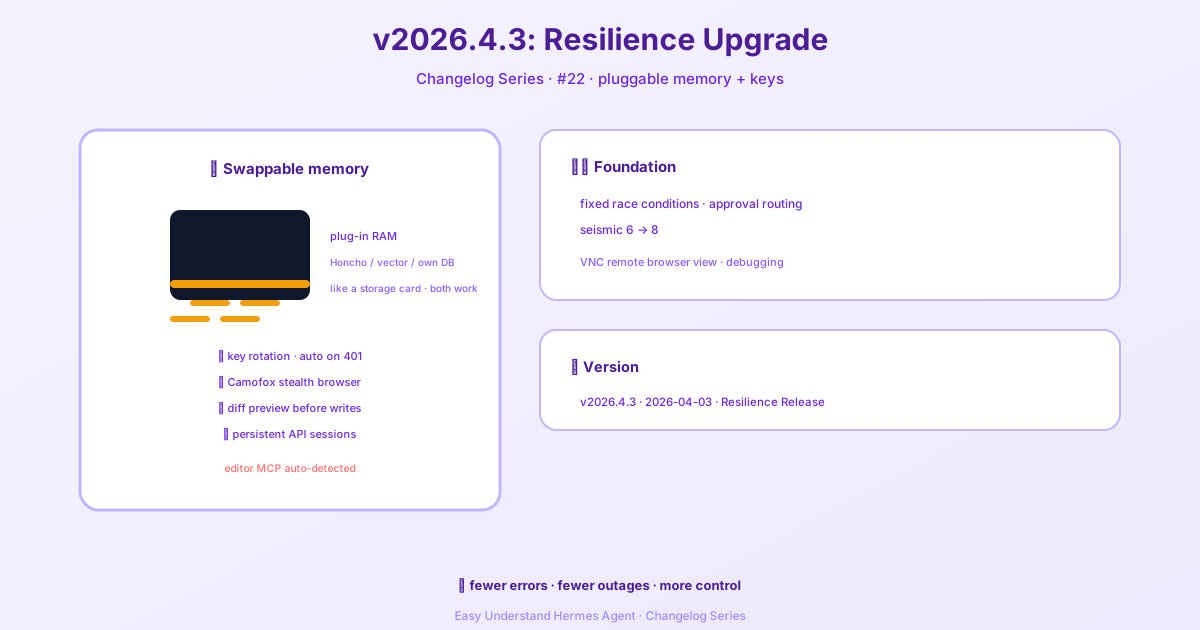
What’s New
Memory You Can Swap Out (Like Batteries) Previously, Hermes used one built-in way to remember things. Now, memory is a plug-and-play system. Want to use a different memory backend (like Honcho or your own custom database)? Just plug it in. The built-in memory still works perfectly out of the box, but you’re no longer stuck with it. It’s like upgrading from a fixed storage closet to modular shelving.
Credential Pools: No More Single Points of Failure If you have multiple API keys for the same provider (say, two OpenAI keys), Hermes can now rotate between them automatically. It uses a “least used” strategy to balance the load, and if one key fails with a 401 error, it silently switches to the next. Think of it as having a team of lifeguards instead of one—if one gets tired, another jumps in.
Camofox Browser: Stealth Mode for the Web
Hermes now includes a new browser backend called Camoufox. It’s designed for anti-detection—useful for scraping or testing sites that block bots. You get persistent sessions, a VNC URL for visual debugging, and it auto-installs with hermes tools. It’s like giving Hermes a disguise and a secret tunnel for tricky web tasks.
Inline Diff Previews: See Before You Leap When Hermes writes or patches files, you now see a live diff right in the activity feed. No more guessing what changed—you get a visual before/after, like a spell-checker showing corrections before you accept them.
API Server: Sessions That Stick Around
The API server (for Open WebUI) now supports persistent sessions via a simple header (X-Hermes-Session-Id). Tool progress streams in real-time, and sessions save to the shared database. This means you can start a conversation, come back later, and Hermes still remembers the context.
Editor MCP Servers: Bring Your Own Tools If you use VS Code, Zed, or JetBrains, your editor can now register its own MCP servers. Hermes picks those up as extra agent tools. It’s like letting your editor’s plugin ecosystem become part of Hermes’ brain.
Improvements
- Gateway Hardening: Fixed many race conditions and approval-routing glitches. The gateway is now much more stable under concurrent requests—fewer “hiccups” when multiple things happen at once.
Fixes
This release includes deep security fixes across 168 PRs and 46 resolved issues. We patched several vulnerabilities in authentication, file handling, and network requests. If you’re running an older version, upgrading is strongly recommended—especially for production deployments.
What This Means for You
If you’re a developer, you get more control and flexibility. If you’re a power user, you get smoother, more reliable sessions. If you’re just curious, Hermes is now a more robust, adaptable assistant that’s easier to trust with complex tasks. The credential pools alone will save you from annoying API key outages, and the inline diffs give you peace of mind.
Upgrade today and let Hermes handle the heavy lifting with a little more grace.
📎 Official release notes: https://github.com/NousResearch/hermes-agent/releases
📖 Official Docs
This article is based on the official Hermes Agent documentation:GitHub ›/releases/tag/v2026.4.3