Hermes Roadmap — What's Coming Next (Official)
The official Hermes Agent roadmap in plain English: desktop tapbacks, the OpenAI-compatible API server, streaming responses, and what they mean.
Hermes Agent publishes its development plans openly in the GitHub .plans directory, so you can always peek under the hood and see exactly what the team is building next.
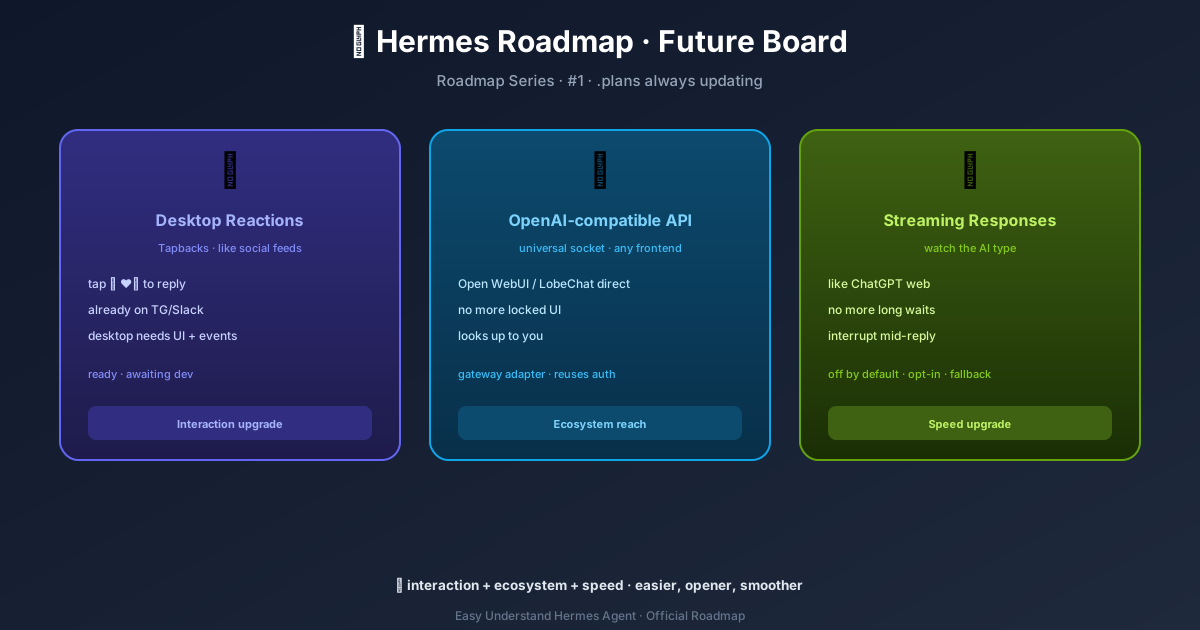
💬 Message Reactions: Tapbacks on Desktop
What it is: Think of the “double-tap to heart” feature on Instagram or iMessage. You tap a message, and a little emoji (👍, ❤️, 😂, etc.) pops up on it. Hermes is bringing this same experience to its desktop transcript. Right now, reactions exist on platforms like Telegram, Slack, and iMessage — but the desktop app is the odd one out. This plan closes that gap.
Benefit to users: Instead of typing “yes” or “that’s funny,” you can just tap a message and react. It’s faster, more expressive, and feels natural. The agent can also react to your messages, so you get a quick, visual “got it” or “👍” without a full text reply. It’s a small change that makes conversations feel far more human.
Current progress: The groundwork is solid. The agent-facing tool (send_message(action="react")) already exists, and the inbound convention for reading reactions is established across platforms. The desktop side is the only blank slate — the plan explicitly notes that grep -ri reaction across the desktop app finds only pet-overlay hearts. So the core plumbing is ready; the UI work is next.
🌐 OpenAI-Compatible API Server
What it is: Imagine your Hermes agent as a universal power outlet. This plan adds a standard socket (an OpenAI-compatible REST API) that any chat frontend can plug into. Instead of being locked into Hermes’s own interface, you can use Open WebUI, LobeChat, LibreChat, or any of the dozens of popular chat UIs that speak the “OpenAI language.”
Benefit to users: Choice and familiarity. If you love the look and feel of Open WebUI, you can point it at your Hermes backend and keep using that interface. You get the power of Hermes (session management, tool use, multi-platform support) wrapped in any frontend you already know and love. It also makes Hermes instantly compatible with a massive ecosystem of existing tools and integrations.
Current progress: This is still in the design phase. The plan lays out two architecture options and clearly recommends Option A: building it as a new gateway platform adapter. This approach reuses all the existing gateway infrastructure (auth, sessions, context building), which means less code to maintain and fewer bugs. The endpoints are defined (/v1/chat/completions, /v1/models, /health), but no code has been written yet.
⚡ Streaming LLM Responses
What it is: Have you ever watched ChatGPT type out its answer word-by-word? That’s streaming. This plan adds the same token-by-token delivery to Hermes across all platforms — CLI, Telegram, Discord, and the future API server. Instead of staring at a “thinking…” spinner for ten seconds, you see the response materialize live.
Benefit to users: Perceived speed and feedback. Even if the total generation time is the same, watching text appear feels dramatically faster. It also lets you catch the agent’s direction early and interrupt if it’s going off the rails. The plan is feature-flagged (streaming.enabled: true in config), so it’s opt-in — if you prefer the current behavior, nothing changes for you.
Current progress: The architecture is well-defined: a callback-based system where the AI agent emits text deltas into a thread-safe queue, and each platform (CLI, gateway, API server) consumes that queue in its own way. The plan explicitly states the agent core is platform-agnostic, and graceful degradation is built in — if a provider doesn’t support streaming, it silently falls back to the non-streaming path. This one feels closest to implementation-ready.
🔮 What This All Means
These three plans paint a clear picture: Hermes is maturing from a powerful but niche tool into a flexible, interoperable platform. Message reactions make conversations more human. The OpenAI-compatible API makes Hermes a drop-in backend for the entire chat-UI ecosystem. Streaming makes every interaction feel snappy and responsive.
Together, they lower the barrier to entry and raise the ceiling of what you can do. You’ll be able to use Hermes with your favorite frontend, see its replies type out in real time, and react to messages with a simple tap — all without learning a new interface.
The roadmap is a living document. The team publishes these plans publicly, and they evolve based on community feedback and real-world usage. So check back often — what’s “coming next” today might already be in your hands tomorrow. And if you have ideas, the .plans directory is public for a reason: your voice can shape what lands on it next.
📖 Official Docs
This article is based on the official Hermes Agent documentation:GitHub ›/tree/main/.plans